Friday, January 30, 2009

“No zombies have been seen in the area, and with any luck, Tuesday’s cold front killed off any undead…”

I've mentioned in the past some of the things about Austin that I really appreciate, such as men in g-strings and trustworthy auto mechanics (though, that auto mechanics thing is debatable). Well, like all people, places, and things (and any noun, really), Austin isn't perfect. Traffic is terrible, for instance. Oh, and the zombies.

Apparently Austin's developed a bit of a zombie problem. But hey, at least they're giving us a head's up about it:

I guess someone hacked into one of those programmable detour signs to warn everyone about the zombies in the area (some of whom are apparently of the dreaded "Nazi zombie" variety). Pretty awesome thing to do, I'd say. Though, I question traffic controller Bruce Jones' speculation that the prank was perpetrated by a "hacker…computer genius from UT." Not so much the UT part, I'd buy that it was a college kid, but a genius? Really? They can't make hack-proof voting machines, but those detour signs are unhackable by anything less than a genius?

Also, as my brother Matt astutely pointed out, "Ms. Katie Petroski [the article's author] is really endangering the citizenry of Austin by suggesting that cold will kill off the zombies."

Thursday, January 29, 2009

Too awesome not to steal

I saw this on blog's are about ego a while ago and thought it was too rad to not pass along. I have no idea where this came from, but I'm stealing/reposting it. Enjoy the flow chart of heavy metal names:


Thanks Dustin!

Monday, January 26, 2009

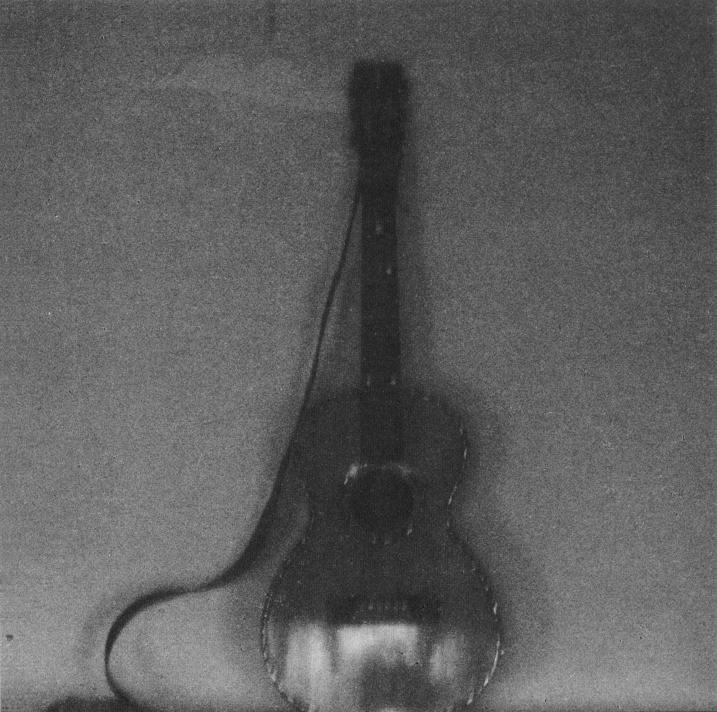
Jandek Reviews, Pt. 2: Living in a Moon so Blue

As I mentioned in my review of Six and Six, I'm anticipating a lot of these Jandek albums to sound very similar to one another. For now, I'll give a brief recap of Jandek's sound, but focus more on giving a brief description of how Living in a Moon so Blue (1982) differs from Six and Six (1981). The upcoming installments in the Jandek Reviews series will follow this general format (brief description of Jandek's style with a description of how the current album differs from those that came before it). Unless I come across an album that is such a departure that warrants a brand new, from scratch review, I'll stick with this format. On to the review of Living in a Moon so Blue:

Jandek's music consists of a single man playing guitar and singing. The guitar is out of tune, and played with hard, unpleasant plucking, rather than strumming. The guitar playing can be arrhythmic and seemingly random. Jandek's singing is usually a hushed whisper, a sort of speak-singing, but can at times rise into a strained, somewhat atonal singing voice. The lyrics tend to be of a stream-of-consciousness, surreal, and nightmarish style. His music is unpleasant and strange, but much like his almost nonsensical lyrics, there is deep emotional and intimate content that is as easy to feel as it is oblique and difficult to make sense of.

Broadly, Living in a Moon so Blue doesn't deviate too much from that description. It does, however, differ from Six and Six in some ways. Lyrically, the album is not as impenetrable. The lyrics are still oblique and personal, but they make more literal sense than Six and Six. The guitar work seems to have progressed a bit. It is still difficult, out of tune, and consists mainly of plucking, but it seems less random. A few songs even incorporate some strumming, but it is just as harsh and abrasive as the plucking (e.g. "One Step Ahead" started giving me a headache by the end of its 2:24 run time). At times, the guitar sounds like it is being strummed and smacked at the same time ("Crime Pays"). Just as the guitar playing has progressed a bit, harmonica is introduced as well, such as in the song "Alexandria Knows."

Overall, Living in a Moon so Blue is very similar to Six and Six, but includes a little more variety and is slightly more straightforward. But make no mistake, this is still harsh, unpleasant, and difficult music. Part of what makes listening to Jandek rewarding is having the patience to appreciate the subtle changes to such a simple and singular approach.

“What’s it like to be stupid?”


If I had to describe Smart People in one word, it would be "generic." It is one of those self-consciously quirky pseudo-indie dramedies, populated by self-consciously quirky characters, who have self-consciously serious conversations peppered with overly clever dialogue. It's not unwatchable, by any means, but it is definitely something that you have seen before. Its familiarity is probably its best asset, lending the movie a nonthreatening sense of comfort.

Smart People follows how a series of events following a head trauma induced seizure changes everyone's lives (at first for the worse, but then for the better). Dennis Quad plays Lawrence Wetherhold, a curmudgeon of an English professor at Carnegie Mellon, who is taken to the Emergency Room after hitting his head while breaking out of the campus impound lot. There he meets Dr. Janet Hartigan (Sarah Jessica Parker), a former student of his, who informs him that due to the fact that he suffered a trauma-induced seizure after his fall, his license would have to be revoked for six months. This prompts the arrival of Lawrence's ne'er-do-welll, lay about adopted brother Chuck (Thomas Hayden Church), who invites himself to stay with Lawrence and act as his chauffeur. Add in Lawrence's two children, the over-achieving, politically conservative, book-smart, socially inept Vanessa (Ellen Page), and the willfully distant, bitter, poetry-writing James (Ashton Holmes), and you have the makings for some quirky family indie drama.

Lawrence, a widower, starts dating Janet. Chuck makes it his mission to get the 17 year old Vanessa to act her age, that is to say, he talks her into smoking pot and getting her drunk. James basically shows up now and again to point out how miserable everyone is, and how Lawrence is so self-involved that he has no idea what's going on in his own family. With the exception of James, who is probably the least fleshed-out character in the movie, the characters' relationships do evolve in some interesting ways. Vanessa masks her own feelings about her father dating again by becoming over protective of him. There is less a sense that she is upset that her mother is being replaced, but more that she herself feels replaced, long having taken on the role of a surrogate housewife. Vanessa's relationship with Chuck takes a somewhat interesting turn, just as it looks to be another free-spirited slob rescues square from button-down boringness story. Unfortunately, Lawrence and Janet's relationship, arguably the main storyline of the movie, is probably the most boring. There's no real emotion progression. Basically, some stuff happens, and that's about it.

Smart People isn't a bad movie. All the main actors (even Parker) are serviceable at their worst, legitimately charming at their best. The directing is competent. The writing is fine, even if it is overly generic. I can't think of a situation in which I'd recommend watching this. I guess if you're looking for an easy movie, a way to turn off your brain and watch a very middle of the road movie, it might do the trick.

Sunday, January 25, 2009

“I get a funny feeling”


I was just eating dinner, reading /Film, and listening to iTunes on shuffle. I stopped momentarily, thinking "Holy shit, this is really good." And yes, I was at least partially reacting to some good Gilliam news (of which there has been quite a bit lately), but no, that wasn't really what gave me pause. The song playing on iTunes was big, anthemic, and extremely catchy. I looked and saw that it was "The Fan" by Material Issue, off their 1994 album Freak City Soundtrack.

As I recall, I bought a used copy of Freak City Soundtrack about a year and a half go as part of a 3-CDs-for-$10 deal, and never really gave the album that much attention. I listened to a few songs, but never paid much attention to it. After hearing "The Fan" I turned shuffle off and listened to the album in its entirety while I finished dinner.

Freak City Soundtrack is filled with fantastic power pop. The entire album is quintessential power pop, loud and fast guitars speeding through pop songs overflowing with infectious hooks. The best songs on the album celebrate feelings of unrequited love. And I do mean celebrate. There is no sad bastard moping to be found, instead the songs rejoice in the nervous excitement one feels when they've met someone new.

This nervous excitement, whether represented in the lyrics or not, permeates the album. You get the impression that lead singer and main songwriter Jim Ellison is the kind of guy who's sort of nerdy, awkward, and much cooler than he thinks he is, and that impression is exactly what comes across in the music. In this respect, he sounds like the bridge between power pop pioneers like Cheap Trick and later bands like Weezer, who found much more success just a few years later.

Material Issue does sound distinctly 90s, which can make them sound a little dated. But songs like "Goin' Through Your Purse," "Kim the Waitress," "A Very Good Thing," and "Ordinary Girl" are near perfect pop songs, showcasing masterful songwriting. Ellison unapologetically incorporates sounds from 60s pop, 70s arena rock, 80s punk, and distills it all into catchy, upbeat, 90s alternative pop. Despite the fact that it sounds very much of its time, the songs on Freak City Soundtrack are simply too good to be tarnished by seeming too dated.

Needless to say, this album was more than worth the $3 or so that I paid for it.

Sadly, Jim Ellison committed suicide less than 2 years after the release of Freak City Soundtrack.

[Note: I was going to embed the video for "Kim the Waitress," the only song off the album that has a video, but Universal Music has disabled the embedding feature. You can watch it here.]

“You can feel it. That cold ain’t the weather. That’s death approaching.”


I've never read the 30 Days of Night comic book, but I've heard that it's fantastic. At the very least, I've seen some of the art work, and it's pretty amazing. I'm not sure if I'll ever get around to reading it, but seeing the movie adaptation certainly isn't motivating me.

30 Days of Night starts with a pretty awesome premise. Every winter, the town of Barrow, Alaska experiences 30 days without sunlight. The small town is so remote that there are no roads in or out, and the flights to and from civilization halt during the month-long darkness. On the eve of final sunset, a rash of vandalism besets the town. Power and phone lines are severed, sled dogs are viciously killed, a commercial helicopter is stripped, and a mysterious stranger (Ben Foster) appears. Shortly after the sun sets, the town is overrun by a pack of vampires, signaling the start of a month-long siege. The story follows the attempts by a small group of residents to hide and wait for the eventual sunrise. Among the residents are Sheriff Eben (Josh Hartnett), his estranged wife Stella (Melissa George), and a handful of other locals.

Though 30 Days of Night may have a few things going for it, overall it's, at best, a by-the-numbers horror thriller. Hartnett is terribly bland as the typical horror movie hero, specifically the calm, competent, self-sacrificing, All-American-Boy variety. George's Stella is essentially the female version of the same archetype, she has all of the same characteristics as Eden, just to a lesser degree. It isn't even worth talking about the other residents; they're not even fleshed out to the point of being archetypes. They're just sort of there to be picked off, one by one. Even Ben Foster (Six Feet Under, 3:10 to Yuma), who generally impresses me more every time I see him, is almost laughable as the Stranger. He talks in a strange and strained accent, speaking in riddles that are supposed to be eerie or terrifying, but are mostly just irritating.

One glaring problem with the movie is the pacing. The vampire siege don't build or escalate, it sort of lurches forward in abrupt leaps. It jumps from build-up, to full on war, to cat-and-mouse hide-and-seek, to confrontational resolution in near transitionless scene changes. On top of robbing the movie of what could have been a slow, suffocating sense of tension, I was also left with the impression that without the subtitles announcing "Day 7" or "Day 18," I probably would have completely forgotten about the 30 days without sun concept, assuming this was all happening over the course of a single night. Hartnett's single proclamation that being rough, pioneering Alaskans, they know how to deal with the cold and ration food appropriately robs the movie of getting any tension out of the 30 days gimmick. A single night, a week, a month, or even a year, there is no tension in how long the vampire siege lasts. No one seems particularly worried about supplies or how long they have to last in the Arctic cold without power.

30 Days of Night's main problems are its combination of genericness, erratic pacing, bland acting, and missed opportunities. Which is not to say the movie is a complete failure. There are a few things that it manages to do well.

The movie's take on vampires, for instance, is initially exciting. These vampires are much more animalistic than most representations. With the exception of a few locals-turned-vampires, the only vampire to speak is the leader (Danny Huston), using an archaic language. The rest of the pack communicates through bird-like chirping and screeching. They behave like a pack of well-organized wild animals. The vampires are reminiscent of the infected of 28 Days Later, just with a bit more self control. There is some every effective use of fast-motion early on, when the vampires are seen only as blurs of dark colors on the white snowy background, picking off residents, who seem to fly off the screen. As with most monster movies, though, once the vampires come out of the shadows, they get progressively less scary.

The residents soon realize that their attackers can't be stopped with bullets, and discover that decapitating them is the most effective way to stop them. This leads to a few gory scenes in which Hartnett graphically chops the heads off of some vampires and some bitten locals (usually taking two or three whacks to do it). The first time around this is a jarring and horrifying sight, but as with the vampires themselves, it is used more and more with diminishing returns. (It also seems oddly timely, given the conversation I had had at a party the night before about real life decapitations like this one and this one.) Along the same lines, there are a few scenes that should have been much more upsetting, but movie simply didn't earn the right to elicit any real emotion from the audience (such as when they're forced to kill a little girl vampire, who inexplicably has an Einsturzende Neubauten tattoo, or when Eden discovers that his deputy has murdered his entire family rather than let the vampires get them).

There are a few scenes that are done well. The vampires' first full-on assault on the town is shown using aerial shots of the town's streets. We see the chaos spread out over a few city blocks, as people scramble through the streets, vainly shooting at the vampires as they are chasing them. Or a husband's vain attempts to chase his wife from crawlspace to crawlspace, as the vampires drag her through the snow and under houses. As the vampire leader, Marlow, Huston is somehow both animalistic and somewhat debonair, almost like he's constantly struggling to remember what it was like to act human. I'm sure there are others, but I'm at a bit of a loss trying to remember them.

Ultimately, 30 Days of Night is a fairly bland, by-the-book movie. I certainly wouldn't recommend renting it. It's the kind of movie that might be worth watching if it's on TV and you have nothing better to do, but that's really the only circumstances I can imagine where watching this movie wouldn't seem like a waste of 2 hours.

Wednesday, January 21, 2009

How does this make you feel?


Personally, this makes me feel good.