Showing posts with label Television. Show all posts

Sunday, January 11, 2009

“The game's out there, and it's play or get played. That simple.”


I recently finished the last episode of the last season of HBO's The Wire. There's not much I can say about The Wire that hasn't already been said in any number of other places (for instance, this 3+ hour special /Filmcast all about the series). It is an amazing series, for a number of reasons. It may be the best written television series I have ever seen. It's incredibly well cast and well acted. The series on the whole reaches an epic level that I have never seen another television show achieve.

After finishing the last episode, I was talking to Molly about it. Molly has never seen it, and was skeptical about whether or not it was worth watching. I admitted that it was hard to recommend it if you have zero interest in watching a police procedural. But you know what? Fuck that. There is no reason for me not to recommend The Wire to anyone and everyone (except maybe my parents, there's plenty of bad language and my mom didn't even like The Departed because of the language).

While The Wire starts as a police procedural, it grows into something much bigger. The first season, and even superficially the second, The Wire is on the surface about the police fighting the drug war. Even as a procedural, it is unique in its realism. You see how police work is probably done. Slowly, frustratingly, bit by bit, until after countless hours a case, maybe a strong case, maybe a weak case, is built. You also see the mechanics of the drug trade. From the dealers on street corners all the way up the hierarchy to men who probably haven't touched any actual drugs in years (and in Season 2, the men who supply it). Even within the genre of the police procedural, The Wire is impeccable. Not unlike Zodiac in its ability to take a genre and do it so perfectly that it feels like something entirely new.

Beyond the police v. drug dealers, The Wire broadens its scope and embraces its real theme, the breakdown of bureaucracy and our failing institutions. Be it the police departments, the schools, our elected offices, everything is broken. The series on the whole paints a bleak and grim portrait of how our society is collapsing under the weight of our inhuman and unwieldy institutions that are drastically broken, but so large and so ingrained as to be unchangeable. Characters struggle to circumvent these institutions, bend the rules within them, or simply do their best to follow the rules, and in every instance they are harshly reprimanded in one way or another. It is in this way that The Wire transcends most every other television show. Its massive cast of characters, its many fingers in many pies, its multi-season long story arcs, and the fact that all of this is handled so well raises The Wire to heights that I'd be hard pressed to compare to any other television show.

One thing that is worth mentioning, though, is as bleak as The Wire may be, it is never depressing. It has plenty of good guys winning and plenty of comic relief (such as the famous scene in which McNulty and Bunk investigate a murder scene only using the word "fuck"). It is true to life in many respects. Everyone wins sometimes, everyone loses sometimes, no one is entirely evil, and certainly no one is entirely pure. One of the elements, from a story perspective, that makes The Wire so engrossing is its unpredictable nature. It is never a foregone conclusion that people will get their comeuppance (be it good or bad). Right up through the last episode, I wasn't sure what was going to happen to most of the characters.

I think I've said all I can say about how much I loved The Wire, and tried my best to explain why I loved it so much. I'll end with some quick and dirty recaps (spoiler-free, I promise) of each of the seasons. It is worth saying, you must watch the episodes in order, and you must watch them all. So no jumping to Season 4 if you're only interested in inner-city education. It is worth it, trust me.


Season 1: Dealers and Police
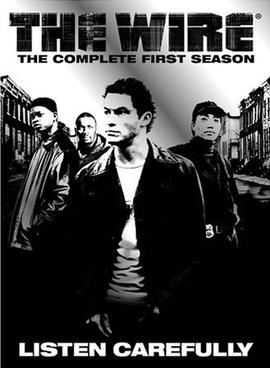
We are introduced to the Baltimore Police Department, and specifically Detective McNulty of the homicide unit. In a move that is typical of McNulty, he complains to a judge about a recent acquittal, and inadvertently causes the creation of a special detail to investigate the Barksdale gang. The detail is meant to be a sham to appease the judge, and McNulty is added to a patchwork group of police investigating Barksdale. We are also introduced to the Barksdale gang, a massive drug dealing organization run by Avon Barksdale and his right hand man Stringer Bell. We are given the ins and outs of how a drug organization of this size operates. This season follows the detail's initial investigation into the Barksdale organization, and illustrates how bureaucratic drug organizations are and how dysfunctional our legitimate institutions are.


Season 2: Dealers, Police, and the Docks

At the opening of Season 2, we are thrown head first into an entirely new cast of characters, the Baltimore dock workers. Both the police and key members of the Barksdale organization are reintroduced, and their stories are continued, but now we also have the dock workers and see how they are involved in the drug trade. On top of following characters introduced in Season 1, the new characters in Season 2 shows how the decline of American blue collar work rots out a city in surprising places and surprising ways, and if that decline is ignored, it is allowed to spread and fester.


Season 3: Dealers, Police, and Politics
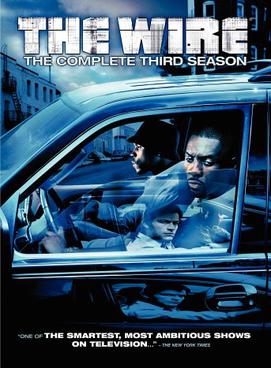
Season 3 retains the characters from Season 1, but for the most part drops the characters and stories from Season 2. As we continue to follow the exploits of the BPD and the luminaries of Baltimore's drug trade, we get our first glimpse into the political arena of the city. We see how politicians can easily hinder everything else, but do not have the power or authority to make anything work better. We see how the selfless desire to better the community around us gives way to selfish self-promotion and senseless politicking. We see how this politics-as-usual corrupts not only the political system, but everything that falls under the neglectful gaze of our elected officials.


Season 4: Dealers, Police, Politics, and the Schools
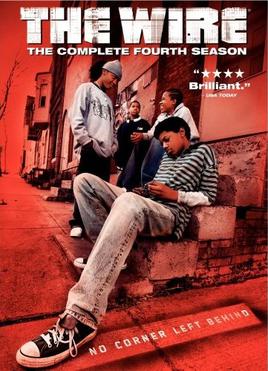
Again, we continue to follow the storylines and characters introduced in Season 1 (the police, the dealers) and Season 3 (the politicians, the up-and-coming Stanfield gang), and add on the public education system of inner-city Baltimore. A character from Season 1, an officer of the BPD, has left the department to take the job of a middle-school teacher. As the previous seasons have taken a sort of top-down perspective, looking at organizations and institutions from the point of view of how they work (or don't work) and the failings of their leadership, in Season 4 we are giving a more bottom-up point of view. We see the children who fall out of the system and into the arms of the drug trade. We see how a drug organization is built, established, and grows. We see how the old is replaced with the new, and how the new is a lot like the old.


Season 5: Dealers, Police, Politics, the Newspaper, and (sort of) the Schools

In the final season, we continue to follow the police, the dealers, the politicians, and as a sort of abstract/absent non-character, the schools. We now begin to follow the media in the form of the Baltimore Sun, a local newspaper. The media is presented as just as corrupt as every other institution, but sinking much faster. The media's role should be to play watchdog, keeping an unflinching eye on our leaders and our institutions, but that role has been replaced with mindless pandering in an attempt to survive an increasingly harsh economic climate.

Sunday, April 15, 2007

Yet another reason to order Showtime

Just in case the allure of nudie films after midnight wasn’t enough, Showtime is also home to one of the greatest series currently on TV. “Masters of Horror” has a simple premise bordering on genius. Essentially, series creator Mick Garris taps a different horror director to write and direct an hour long movie for each episode. For those of you in the know, this is painfully old news. The show has been on for over two years, and the second season’s movies are currently trickling out on DVD. For those of you not in the know, well, now you are.

Impressively, the first season managed to get some true genre luminaries, including Dario Argento (Suspiria), Don Coscarelli (Phantasm), Tobe Hooper (Texas Chainsaw Massacre) and Stuart Gordon (Reanimator), among others. Also on the roster are some pretty big name directors who have dipped their toe in the horror waters without every really jumping all the way in. John Landis (American Werewolf in London), Joe Dante (Gremlins), and Takashi Miike (Audtition) have all contributed to the series. Given a stacked line-up like that (plus a few modern directors still making names for themselves, like Lucky McKee and William Malone), the series is pretty fucking exciting for all the horror aficionados out there.

I had not actually seen any of the shows until recently. Basically, I can’t afford Showtime and I’ve never really wanted to pony up the $2.50 rental fee to rent a 50 minute movie. I finally broke down and went to a local video store on 2-for-1 day to check out a couple. I picked up the first season installments by John Landis (who returns for another episode in season 2) and Don Coscarelli.

The Coscarelli episode, entitled Incident On and Off a Mountain Road, is adapted from a Joe Linsdale short story (Linsdale also penned the novella from which Coscarelli adapted his cult favorite Bubba Ho-Tep). As a movie, it was good, but nothing special. The plot revolved around a young woman who crashes her car into an abandoned car on a road leading through the Northwest wilderness. When she gets out to see if the other driver is around, a giant hulking maniac chases her off into the woods. A typical demented-killer-chasing-beautiful- woman story begins to develop with some fun twists. The woman, as revealed through a series of flashbacks, was once married to a paranoid survivalist who teaches her crazy backwoods self-defense strategies. All in all, a good and entertaining chase movie, with some fun and unexpected takes on a well-worn subgenre. It also has a surprisingly satisfying ending, given the simplicity of the plot. As an added bonus, Ethan Embry (the GWAR-loving stoner from Empire Records and the sweet Preston Meyers of Can’t Hardly Wait) pulls out an amazing performance as the survivalist husband, lending a surprising amount of depth to a character that could very easily slipped into the realm of absurd.

The other episode was John Landis’ Deer Woman. As you can imagine from the title, the story involves a supernatural creature that is half deer and half woman going on a murderous, yet sexy rampage. In typical Landis style, the story is less scary and more funny with lots of gore. Similar to his classic American Werewolf in London, the movie contains tense scenes with a darkly wry sense of humor. Working as a horror-comedy, the movie is incredible. Absurd humor bordering on slapstick elicit some truly laugh out loud moments (one of my favorite being when a detective is trying to imagine all the way that one of the murders could have happened). Not to mention that, in true Showtime fashion, this one contains a couple of boob-shots. I was happy to see that Landis is returning for another installment for the second season.

Overall, as movies, both of these are a little above average. But as episodes in an anthology TV series, they are incredible. Though their tones and styles couldn’t be more different, they both offer roughly the same thing. A quick and streamlined version of what you would ordinarily look for in a full-length horror film. I personally would say that they are worth checking out. The fact that so many brilliant horror directors are all contributing to this project means, more than anything else, the series serves as a great introduction to both classic and up-and-coming directors and their individual styles. I’m especially looking forward to watching Dario Argento’s two episodes (Jenifer and Pelts).

The series seems to have something for both hardcore horror fans who are always anxious to consume more and more by their favorite directors, as well as the casual fan looking for either an introduction to the world of really good horror (rather than say, the glut of J-horror remakes or Eli Roth’s empty gore-fests) or just a faster way to get their thrills. If you have a video store with 2-for-1 days or just cheap rental fees, definitely check out a couple.