Sunday, January 11, 2009

“Hope I’m not freaking you out. Wait! I hope I AM freaking you out!”


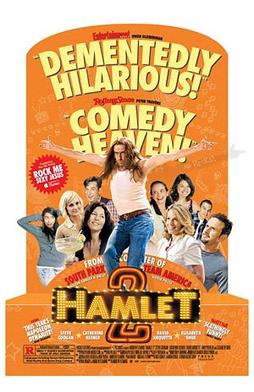
Hamlet 2 generated a huge amount of buzz when it was screened at Sundance, but it garnered pretty mediocre reviews upon its release (it has a 63% on RottenTomatoes). In reality, Hamlet 2 probably belongs somewhere between those two.

Failed actor Dana Marschz (a fantastic and fully committed Steve Coogan) has been teaching high school drama in the apparent cultural wasteland of Tucson, AZ, producing his stage adaptations of Hollywood motion pictures (including Erin Brockovich, Mississippi Burning, and a plan to do a musical version of The Lake House). Following budget cuts, the school has decided to shut down drama. Following a heart-to-heart with Dana's nemesis, a middle-school aged drama critic for the school newspaper, he decides to stage his greatest play ever in an attempt to save drama. He is going to stage his original play "Hamlet 2", a sequel to (as Dana calls it) "Hamlet 1" that is mostly about Dana's troubled relationship with his father.

As a consequence of every other elective having already been shut down, Dana's drama class is now populated by stereotypes of kids from the wrong side of the tracks, mainly Latinos (though, as Dana points out, "Just because they're Latino doesn't make them gangbangers"). Things are even more tumultuous for Dana as his harpy of a wife simultaneously belittles him and pressures him to have a baby, Dana meets actress-turned-nurse Elizabeth Shue (playing herself in a small but great role), and intense controversy spreads as words gets out that "Hamlet 2" contains scenes of violence, graphic sex, and non-stop heresy.

When Hamlet 2 works, it produces plenty of laugh-out-loud gags. Dana's lack of social awareness and basic social tact are the basis for plenty of the movie's best moments. His unbridled enthusiasm, combined with his total lack of any talent (not just acting talent, but also teaching, directing, writing, and basically everything) makes Dana both likable and the non-stop butt of most of Hamlet 2's jokes. This combination of likableness and obvious ineptitude works to allow the audience to both root for Dana and revel in his constant failure.

While not all of Hamlet 2's humor is irreverent and offensive, a good portion of it is. As you can imagine, a parody of the "inspirational teacher" movie about a man staging a high school production containing a scene of group sex between Hamlet, Gertrude, Polonius, and Hillary Clinton is not going to be very PC. Don't worry, the more offensive humor isn't mean-spirited, but based more on character ignorance. Unless you're from Tucson. Tucson really gets taken to task (as Dana tells one of his students: "You're going to have a magical life. Because no matter where you go, it's always going to be better than Tucson").

There are things that don't work so well, though. The characters-as-stereotypes gag can get a little old. Try as she might, Catherine Keener can't really give too much depth to the role of Dana's unbearable bitch of a wife. Amy Poehler's ACLU lawyer is painfully abrasive and not at all funny. There is not any real emotional depth to the movie, which can be both good and bad. While the movie doesn't try to shoehorn in any life lessons or commit any emotional blackmail, there also isn't a lot of investment in the characters. You just sort of ride along, from one hilarious moment to the next.

Plus there is a lot of Steve Coogan ass. And maybe some balls, too. I'll leave you to decide if that's good or bad.

Ultimately, Hamlet 2 is definitely funny. It might not be a classic movie, but it has plenty of classic moments (e.g. the "creative process" montage, Elizabeth Shue telling Dana's students her favorite thing about acting, Dana's declaration to his unborn child). I wouldn't say anyone needs to see it, but it's worth checking out if you're looking for some fun and easy laughs.

“The game's out there, and it's play or get played. That simple.”


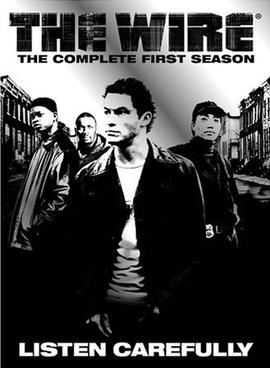
I recently finished the last episode of the last season of HBO's The Wire. There's not much I can say about The Wire that hasn't already been said in any number of other places (for instance, this 3+ hour special /Filmcast all about the series). It is an amazing series, for a number of reasons. It may be the best written television series I have ever seen. It's incredibly well cast and well acted. The series on the whole reaches an epic level that I have never seen another television show achieve.

After finishing the last episode, I was talking to Molly about it. Molly has never seen it, and was skeptical about whether or not it was worth watching. I admitted that it was hard to recommend it if you have zero interest in watching a police procedural. But you know what? Fuck that. There is no reason for me not to recommend The Wire to anyone and everyone (except maybe my parents, there's plenty of bad language and my mom didn't even like The Departed because of the language).

While The Wire starts as a police procedural, it grows into something much bigger. The first season, and even superficially the second, The Wire is on the surface about the police fighting the drug war. Even as a procedural, it is unique in its realism. You see how police work is probably done. Slowly, frustratingly, bit by bit, until after countless hours a case, maybe a strong case, maybe a weak case, is built. You also see the mechanics of the drug trade. From the dealers on street corners all the way up the hierarchy to men who probably haven't touched any actual drugs in years (and in Season 2, the men who supply it). Even within the genre of the police procedural, The Wire is impeccable. Not unlike Zodiac in its ability to take a genre and do it so perfectly that it feels like something entirely new.

Beyond the police v. drug dealers, The Wire broadens its scope and embraces its real theme, the breakdown of bureaucracy and our failing institutions. Be it the police departments, the schools, our elected offices, everything is broken. The series on the whole paints a bleak and grim portrait of how our society is collapsing under the weight of our inhuman and unwieldy institutions that are drastically broken, but so large and so ingrained as to be unchangeable. Characters struggle to circumvent these institutions, bend the rules within them, or simply do their best to follow the rules, and in every instance they are harshly reprimanded in one way or another. It is in this way that The Wire transcends most every other television show. Its massive cast of characters, its many fingers in many pies, its multi-season long story arcs, and the fact that all of this is handled so well raises The Wire to heights that I'd be hard pressed to compare to any other television show.

One thing that is worth mentioning, though, is as bleak as The Wire may be, it is never depressing. It has plenty of good guys winning and plenty of comic relief (such as the famous scene in which McNulty and Bunk investigate a murder scene only using the word "fuck"). It is true to life in many respects. Everyone wins sometimes, everyone loses sometimes, no one is entirely evil, and certainly no one is entirely pure. One of the elements, from a story perspective, that makes The Wire so engrossing is its unpredictable nature. It is never a foregone conclusion that people will get their comeuppance (be it good or bad). Right up through the last episode, I wasn't sure what was going to happen to most of the characters.

I think I've said all I can say about how much I loved The Wire, and tried my best to explain why I loved it so much. I'll end with some quick and dirty recaps (spoiler-free, I promise) of each of the seasons. It is worth saying, you must watch the episodes in order, and you must watch them all. So no jumping to Season 4 if you're only interested in inner-city education. It is worth it, trust me.


Season 1: Dealers and Police

We are introduced to the Baltimore Police Department, and specifically Detective McNulty of the homicide unit. In a move that is typical of McNulty, he complains to a judge about a recent acquittal, and inadvertently causes the creation of a special detail to investigate the Barksdale gang. The detail is meant to be a sham to appease the judge, and McNulty is added to a patchwork group of police investigating Barksdale. We are also introduced to the Barksdale gang, a massive drug dealing organization run by Avon Barksdale and his right hand man Stringer Bell. We are given the ins and outs of how a drug organization of this size operates. This season follows the detail's initial investigation into the Barksdale organization, and illustrates how bureaucratic drug organizations are and how dysfunctional our legitimate institutions are.


Season 2: Dealers, Police, and the Docks

At the opening of Season 2, we are thrown head first into an entirely new cast of characters, the Baltimore dock workers. Both the police and key members of the Barksdale organization are reintroduced, and their stories are continued, but now we also have the dock workers and see how they are involved in the drug trade. On top of following characters introduced in Season 1, the new characters in Season 2 shows how the decline of American blue collar work rots out a city in surprising places and surprising ways, and if that decline is ignored, it is allowed to spread and fester.


Season 3: Dealers, Police, and Politics

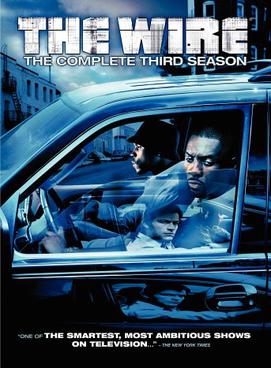
Season 3 retains the characters from Season 1, but for the most part drops the characters and stories from Season 2. As we continue to follow the exploits of the BPD and the luminaries of Baltimore's drug trade, we get our first glimpse into the political arena of the city. We see how politicians can easily hinder everything else, but do not have the power or authority to make anything work better. We see how the selfless desire to better the community around us gives way to selfish self-promotion and senseless politicking. We see how this politics-as-usual corrupts not only the political system, but everything that falls under the neglectful gaze of our elected officials.


Season 4: Dealers, Police, Politics, and the Schools

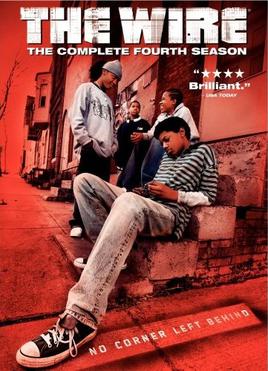
Again, we continue to follow the storylines and characters introduced in Season 1 (the police, the dealers) and Season 3 (the politicians, the up-and-coming Stanfield gang), and add on the public education system of inner-city Baltimore. A character from Season 1, an officer of the BPD, has left the department to take the job of a middle-school teacher. As the previous seasons have taken a sort of top-down perspective, looking at organizations and institutions from the point of view of how they work (or don't work) and the failings of their leadership, in Season 4 we are giving a more bottom-up point of view. We see the children who fall out of the system and into the arms of the drug trade. We see how a drug organization is built, established, and grows. We see how the old is replaced with the new, and how the new is a lot like the old.


Season 5: Dealers, Police, Politics, the Newspaper, and (sort of) the Schools

In the final season, we continue to follow the police, the dealers, the politicians, and as a sort of abstract/absent non-character, the schools. We now begin to follow the media in the form of the Baltimore Sun, a local newspaper. The media is presented as just as corrupt as every other institution, but sinking much faster. The media's role should be to play watchdog, keeping an unflinching eye on our leaders and our institutions, but that role has been replaced with mindless pandering in an attempt to survive an increasingly harsh economic climate.

Thursday, January 8, 2009

Apologies for “Kitten Party”

It was brought to my attention by Molly that the "Kitten Party" picture that I included in my "Goodbye 2008, Hello 2009" post was not a painting, as I thought, but in fact a photograph. A taxidermist/artist named Walter Potter created extremely intricate and elaborate displays using stuffed animals.

At first I was horrified when Molly told me this. Then I actually started looking at Potter's work. Dead kittens aside, his work is really pretty incredible. Look at the details in the Kitten Party picture, the tarts on the plates, the tea in the cups, the plates and saucers. And this is only half of a larger piece, the other half shows a group of kittens playing croquet in front of a house. Pretty amazing stuff, all things considered.

And don't worry, not all of his work is posed dead kittens. There are squirrels fencing (I really like that one), frogs training for track and field, rabbits in school, a monkey riding a goat, and plenty others. I was going to post pictures, but accidentally subjecting people to the Kitten Party picture was enough. I would recommend checking out some of his other stuff, though.

C'mon, you know you want to. Do it. Just go ahead and google "walter potter".

And again, my apologies for making you looking at dead kittens before. I swear, it (probably) won't happen again.

“Yellow! Yellow! Yellow! Yellow!”

Darkon is a game. Darkon is also a movie about Darkon the game. Darkon is a not particularly good movie about Darkon the game.

Darkon the game is essentially live-action D&D, an elaborate role-playing game. Players dress up in medieval style costumes, wield foam-padded swords, staffs, battle axes, and shields. They meet every two weeks, with weekend-long campouts once a month, to play in forests and fields around the greater Baltimore area. Playing Darkon consists mainly of going to these gatherings and spending the entire time in character (as with D&D and other RPGs, each person creates a character, complete with costume, backstory, etc.). Characters form countries and vie to take over more and more land. "Winning" Darkon ostensibly means taking over the entire realm, including conquering other countries and seizing their land. Much of the time playing Darkon seemingly consists of political discussions (whether or not to take over another country, forming allegiances between countries, backdoor dealing, etc.), and battles. The battles are when two countries fight each other with their big foam weapons, resulting in a spastic melee of wood, foam, limbs, and yelling (there is an elaborate hit-point and armor system that goes into determining which side wins that involves waling on each other while yelling colors).

Here is a video of a Darkon battle, apparently filmed by a Darkon player, that is not in the movie:

At the beginning of the movie, there is a major conflict brewing between Laconia and Mordom, two Darkon countries. Mordom has been dominating the realm for an extended period of time, and Laconia has split from their alliance with Mordom to unite the smaller countries in an effort to stop Mordom from winning Darkon (it's never clear in the movie if anyone has even actually won Darkon in the past or if it's really even possible). There's some stuff about Bannor of Laconia (real name Skip) wanting to bring the Mordom leader, Keldar (real name Kenyon), before some kind of war crimes tribunal. Mostly there's a lot of yelling in pseudo-Shakespearian-medieval-speak, building to what appears to be a massive war. The movie jumps back nine months to introduce the audience to the world of Darkon, and the specific events that lead to this confrontation.

Darkon lays its cards down pretty clearly and pretty early. The movie follows a select group of players (they never state the actual number of Darkon players, but it appears to be quite a lot), both in their real workaday lives, as well as their fantasy Darkon lives. It's immediately apparent that we are to view the Darkon players as good-natured noble misfits, reluctant social outcasts, who can only truly express themselves and find happiness when they are playing Darkon. And that's OK. They don't care if you think it's childish or silly or embarrassing. This is where they go to get away from you and all your judgment.

That's one half of the movie. The other tracks the goings on in Darkon the game, presenting it mainly as an actual fantasy movie. This sometimes works and sometimes doesn't. There is the dramatic voiceover that starts the movie, and the music that swells as the battles rages, both of which work pretty well in a silly/fun sort of way. Unfortunately there is also the attempt to film and edit the fight scenes like something out of Braveheart, which doesn't really work, seeing as these aren't carefully choreographed battle scenes. The camera tries to dramatically shoot a horde of people running around hitting each other, but it can't get close enough or in the middle of it without getting in the way.

The pairing of players-in-their-real-lives paired with the Darkon-as-real is established from the get-go, and the film never really deviates from that. Ultimately, this means that even though the movie is less than 90 minutes, it gets pretty old by the end. There is some drama in what will happen in the world of Darkon, but not enough to make the movie very engrossing the whole way through. There is a sort of second order suspension of disbelief that the viewer has to buy into that presents some problems. There is little to no drama in the players' real lives. Most of the older players seem happy, successful, married, with children, etc. Some of the younger players seem more awkward and unsatisfied with their real lives. But there really isn't any progression beyond what is immediately presented as the players are introduced (with the exception of one female player who lives in her parents' basement because the father of her child left her and hasn't been keeping up on child support, but even that isn't particularly dramatic – the father starts paying and she gets her own place).

Darkon is enjoyable in that you get to watch a bunch of nice people have a ton of fun doing something they love. Unfortunately, it doesn't make for a particularly engrossing movie.

Wednesday, December 31, 2008

Goodbye 2008, Hello 2009

I can't go out of 2008 on that angry rant against Time Warner. That just wouldn't be right.

So here are some things that should help 2008 go out with a smile:

Kitten Party!

Crispin Glover + the Fonze + Jefferson = Amazing!


And for a little inspiration to get us all started on the right foot in 2009, here is Bo Schembechler's infamous "The Team" speech:


Those who stay will be champions.

Happy New Year!

I hate Time Warner

One of the few perks of living in my apartment building is that I get free cable TV. Actually, that's probably the only perk. If you know me, then I'm sure you've heard plenty of stories about my building, including but not limited to my mentally ill neighbors and their shenanigans, the drug addict ODing upstairs, and the fact that it can take over 6 months for them to fill maintenance requests. The downside to the free cable, though, is that I have to put up with Time Warner and their bull shit.

Earlier in the year, a dispute between Time Warner and LIN TV (owner of local NBC affiliate KXAN) resulted in Time Warner pulling NBC from its line-up. I get over 70 channels, and yet I was missing one of the major networks. It didn't help that this happened right about the time 30 Rock came back on the air. (This was eventually settled, and NBC is back).

Even though I get cable TV for free, I have to pay for cable internet. After trying to live without internet for about a year and half, I finally decided that I just had to bite the bullet and order it. In part for work purposes, but also because, like everyone, I just like having the internet. Seeing as I already had Time Warner cable in my apartment, I just decided to order internet from them as well. The $35 a month for internet seemed a little steep, but whatever. That is, until, I got my bill for this month, and the rate has jumped. Now I'm paying almost $50 a month, which strikes me as fucking bogus.

And finally, just this morning, I found out that at midnight, I could lose all Viacom channels. Again, Time Warner is in some dispute, and they're going to screw their customers over by just dropping the channels until it gets settled. I'm not too worried about losing MTV or Nickelodeon, but losing Comedy Central kind of sucks, and I'm not sure what other channels are owned by Viacom. Regardless, it's ridiculous that two massive companies are having some kind of dumbass pissing contest, and in the end all Time Warner customers and Viacom viewers get screwed.

I hate you Time Warner. I'm thinking it might be time to Go Grande, and if you live in the Austin area and are thinking about getting cable or internet, I suggest you do the same. Fucking Time Warner…

I still think the snow is pretty (as long as I don’t have to drive in it)

A few posts back I got a little whimsical about snow in Austin, and ended up sparking a heated debate (or at least what passes for a heated debate here at the OM) in the comments. I half-jokingly said I was going to take a bunch of pictures of the snow while up in Michigan for the holidays. Guess what? I did!

Enjoy some nice snowy pictures of my parents' backyard:

And just because, here's a picture of my cat sitting in my suitcase while I was trying to pack:

Happy Holidays! Have a fun and safe New Years!